How to Safely Remove Christmas Lights: The Professional Preservation Guide
- Thomas Latham
- 1 hour ago
- 13 min read

What if the most hazardous aspect of your holiday season isn't the winter weather, but the moment you decide to scale a ladder for the post-season cleanup? Most homeowners share a common frustration with tangled wires and a genuine fear of damaging delicate shingles or gutters during the teardown process. It's a sentiment we understand deeply, as the transition from a festive display to a pristine exterior requires a meticulous strategy for how to safely remove christmas lights without compromising your property's integrity.
This guide will teach you to adopt the disciplined standards used by professional installers, ensuring your lighting investment is preserved for next year's festivities. You'll discover a sophisticated workflow that incorporates essential safety protocols, such as OSHA-aligned fall protection for heights over six feet and proper electrical handling. By the end of this article, you'll possess the technical knowledge to execute a damage-free removal that prioritizes both your personal safety and the long-term health of your home's exterior surfaces. Our approach emphasizes precision and care, transforming a daunting chore into a controlled, professional preservation process.
Key Takeaways
Adopt a professional safety standard by utilizing a disciplined preparation phase and specialized gear that ensures total stability at heights.
Apply the 'Reverse Installation' logic to learn exactly how to safely remove christmas lights while avoiding common mistakes like the 'Pull Method' that damage delicate wiring.
Preserve the long-term integrity of your home’s exterior by employing techniques designed to prevent gutter sag and siding abrasions during the removal process.
Ensure the longevity of your holiday investment through systematic post-removal testing and professional-grade storage solutions like the 'Spool Method.'
Determine when to transition from a DIY approach to professional maintenance based on height complexities and the sophisticated requirements of your specific roofline.
Table of Contents
Preparation and the Professional Safety Standard
Professional light removal is far more than a simple reversal of the installation process; it's a disciplined exercise in risk management and property preservation. Approaching this task with what we call the 'Athlete’s Mindset' means recognizing that preparation is the primary differentiator between a successful project and a costly accident. Before you even consider ascending a ladder, every piece of equipment and every environmental factor must be scrutinized with the same precision a professional technician applies to a high-stakes commercial site. Discipline in the preparation phase prevents the impulsive decisions that lead to falls or structural damage.
While the history of Christmas lights illustrates a fascinating evolution from simple candles to complex, high-voltage exterior displays, the fundamental requirement for physical safety has remained constant. Mastering how to safely remove christmas lights requires acknowledging that modern displays often involve sophisticated wiring and heights that demand more than just a standard household ladder. Professional-grade stabilizers and stand-off brackets are non-negotiable for protecting your gutters from the weight of the climber. Additionally, the 'Buddy System' isn't a suggestion for high-reach projects; it's a mandatory safety requirement that ensures ladder stability and provides immediate assistance should a light string become snagged.
Inspecting Your Equipment Before the Climb
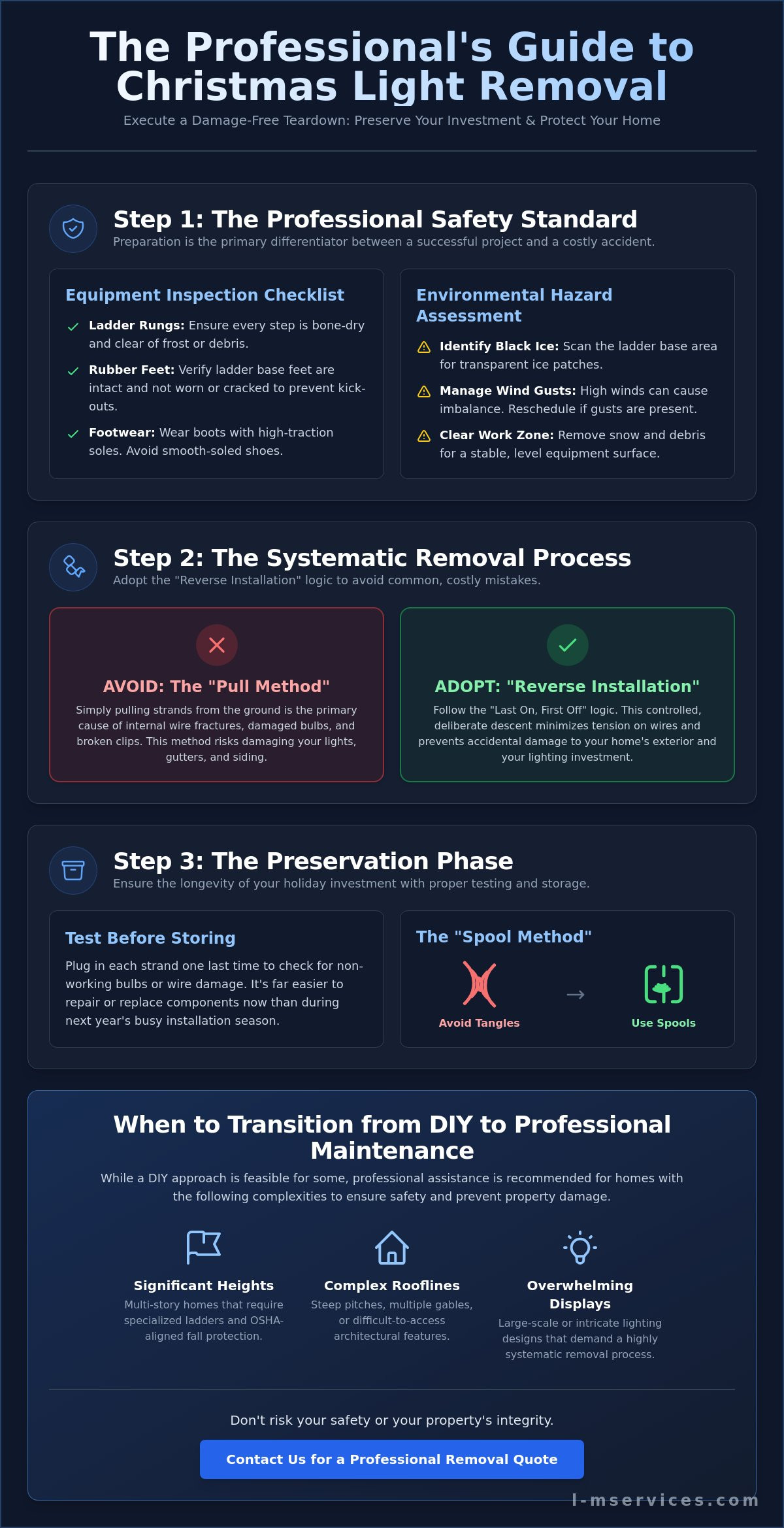
A meticulous inspection of your hardware is the first step in maintaining a safe work environment. You must verify the integrity of every component to ensure it can withstand the rigors of the job. Consider the following checklist before you begin:
Check ladder rungs: Philadelphia winters often leave a thin layer of frost or slippery debris on metal surfaces. Ensure every step is bone-dry and clear.
Verify rubber feet: Inspect the base of your ladder for worn or cracked rubber feet. These components are your primary defense against ladder kick-outs on cold, hard surfaces.
Footwear assessment: Wear boots with high-traction soles. Avoid smooth-soled shoes that lose their grip when transitioning from snow-covered ground to a ladder rung.
Environmental Hazard Assessment
The weather in the Northeast can be unpredictable, and ice or wind can dictate your entire removal schedule. A professional approach involves a calm, logical assessment of the work zone before any physical labor begins. If conditions aren't optimal, the most professional decision you can make is to reschedule the project for a safer window.
Identify 'black ice': Scan the area where the ladder base will sit for transparent ice patches that can form overnight.
Manage wind gusts: High winds can catch large light displays like a sail, potentially pulling a climber off balance. If gusts are present, wait for a calmer day.
Clear the work zone: Remove accumulated snow or post-holiday debris from the perimeter of your home to ensure a stable, level surface for your equipment.
A Systematic Approach to Light Removal
A systematic workflow is the hallmark of professional service delivery. While it's tempting to simply pull light strings from the ground as suggested in some casual online forums, this "pull method" is the primary cause of internal wire fractures and clip failure. Professional technicians understand that the longevity of your holiday investment depends on a controlled, deliberate descent. By following official holiday decorating safety tips, you protect both your equipment and your property. The logic is simple: last on, first off. This "reverse installation" strategy ensures that you aren't fighting against your own previous work, which minimizes tension on the wires and prevents accidental damage to your home's exterior.
When considering how to safely remove christmas lights, you must treat the teardown with as much reverence as the installation. This isn't a race to the finish; it's a preservation project. As you navigate the descent, manage your power sources and cords with care to avoid tripping hazards or snagging strands on architectural features. Labeling each strand with its specific location as you go is the secret to an effortless 2027 setup. If the complexity of your roofline makes this systematic approach feel overwhelming, you might consider professional holiday lighting installation for future seasons to ensure every strand is handled with expert care from start to finish.
The Step-by-Step Removal Sequence
Execution begins with total power isolation. Disconnect all timers and power supplies first to eliminate any electrical risk during the physical removal. Once the system is dormant, clear the perimeter by removing ground-level displays, such as path lights or shrub wraps. This creates a clean workspace for ladder placement. Finally, work from the furthest point of the display back toward the primary power source. This ensures that you're always moving toward your exit point, keeping the workspace organized and manageable.
Handling Clips and Fasteners with Precision
The integrity of your home's exterior relies on how you handle the small details. Avoid the urge to yank on clips, as this can easily lead to "gutter sag" or displaced shingles. Use a gentle release technique for gutter clips, applying slight pressure to the fastener rather than the wire itself. When removing shingle tabs, slide them out horizontally to avoid lifting the asphalt or damaging the protective granules. Always collect every piece of hardware as you work. Missing clips left in the grass can become dangerous projectiles when you start your spring lawn maintenance.
Protecting Your Home’s Exterior During Removal
Preserving the structural integrity of your property requires an acute awareness of how seasonal decorations interact with various building materials. While the visual appeal of a holiday display is temporary, the physical impact on your home's envelope can be permanent if handled carelessly. In King of Prussia, where architectural styles often feature premium siding and delicate masonry, the removal process must be executed with surgical precision. This seasonal task is a critical pillar of exterior home maintenance philadelphia, as it provides a rare opportunity to inspect the transition points of your roofline and siding for signs of wear or moisture intrusion.
When executing the teardown, you must prioritize the preservation of your home's protective layers. For instance, asphalt shingles are particularly vulnerable to granule loss if light clips are pried upward rather than slid out horizontally. This loss of granules accelerates the aging of the roof, leaving it susceptible to UV damage and leaks. For homeowners seeking a detailed procedural overview, learning to Safely Remove and Store Your Christmas Lights can provide the necessary framework to avoid these common pitfalls. Understanding how to safely remove christmas lights involves more than just unhooking wires; it's about safeguarding the long-term value of your primary investment.
Gutter and Roofline Integrity
Gutter systems are designed to manage water flow, not to support the weight of a climber or the tension of heavy light strings. Leaning a ladder directly against a gutter is a high-risk move that often results in "gutter sag," which disrupts the necessary pitch for proper drainage. During the removal process, you may encounter clips that have effectively frozen to the surface due to Philadelphia's winter temperatures. Forcing these fasteners can bend the gutter lip or tear the fascia board. Always check for trapped organic debris that may have accumulated behind the lights, as this moisture-wicking material can lead to localized rot if left unaddressed until spring.
Surface-Specific Care
Different exterior finishes require tailored approaches to prevent aesthetic degradation. Stucco finishes, common in many regional homes, are easily scuffed or chipped by ladder contact; using padded stand-offs is a professional requirement for these surfaces. If you utilized adhesive-backed clips for window frames, remove any remaining residue with a surface-safe solvent to prevent permanent staining or the collection of dirt. Finally, ensure that no metallic fasteners are left behind. Even small staples or wire fragments can rust quickly, leaving unsightly streaks on your siding that are difficult to remove without professional intervention.
The Preservation Phase: Testing and Storage
The transition from the roofline to the storage bin represents the most critical phase of equipment longevity. While the physical descent is complete, the process of how to safely remove christmas lights concludes only when the system is meticulously archived for the off-season. Professional technicians treat this stage as a post-operational debrief. By testing every strand immediately after removal, you identify potential failures caused by winter weather or the removal process itself. This proactive approach eliminates the frustration of discovering dead bulbs during the high-pressure installation window next year, ensuring your display remains a reliable asset rather than a seasonal liability.
Wire longevity is dictated by how you manage the internal copper filaments during storage. The "Spool Method" is the professional standard, as it maintains a consistent tension and prevents the tight kinking associated with the "Bundle Method." When wires are folded or knotted, the insulation can crack, leading to moisture intrusion and eventual short circuits. Cleanliness also plays a vital role in preventing degradation. Ground-level strings often accumulate road salt and grime during Philadelphia winters; if these corrosive elements aren't wiped away, they can eat through wire coatings over several months of storage. For those who prefer a turnkey solution that includes this level of meticulous oversight, our holiday lighting installation service manages the entire lifecycle of your display with professional precision.
Electrical Quality Control
Before any equipment is boxed, it must undergo a rigorous quality inspection. Scan the entire length of the wire for "critter chews" or frayed insulation, as squirrels often target the soy-based coatings found on modern wiring. Replacing burnt-out bulbs now prevents the remaining lamps on the circuit from being overdriven, which significantly extends the life of the entire strand. This attention to detail ensures that your LEDs, which are sensitive to voltage fluctuations, remain in peak condition for their next deployment.
Professional Storage Solutions
Climate control is the final pillar of the preservation phase. LED components and plastic housings can become brittle when exposed to the extreme temperature swings of an uninsulated attic or damp crawlspace. Utilize heavy-duty plastic bins equipped with rubber gaskets to prevent moisture ingress and pest access. A sophisticated organization system involves labeling each bin by "Zone," such as "North Peak" or "Front Door," and storing extension cords separately from the light strings. This logical structure mirrors a professional workflow, allowing for a seamless and efficient re-installation when the next holiday season arrives.
When to Transition from DIY to Professional Maintenance
Determining the precise moment to transition from a self-performed task to a professional service is a critical component of responsible property stewardship. While the technical knowledge of how to safely remove christmas lights is accessible, the physical execution often introduces variables that exceed the standard homeowner's risk profile. Safety is a calculation of risk versus reward. When the architectural complexity of your roofline requires specialized fall protection or when the height exceeds your personal comfort zone, the transition to professional maintenance becomes a strategic necessity. This threshold is often reached on multi-story properties in King of Prussia where ladder placements are restricted by landscaping or uneven terrain, necessitating a level of precision that only a trained team can provide.
Entrusting your holiday teardown to a dedicated partner allows for a seamless integration into your broader home care schedule. Professional removal serves as a diagnostic window, allowing technicians to identify early signs of wear that might otherwise go unnoticed until they become costly repairs. This phase is the ideal time to address gutter cleaning philadelphia, ensuring that the drainage system is entirely clear of seasonal debris before the heavy spring rains arrive. A clean removal sets a pristine stage for the best power washing king of prussia, allowing for a comprehensive deep clean of your siding and masonry once the decorative elements are safely archived.
The Benefits of Professional Holiday Services
The primary advantage of professional intervention is the total elimination of liability for the homeowner. Scaling ladders in the unpredictable winter climate of the Northeast carries inherent risks that our teams are specifically equipped to manage through rigorous training and high-grade equipment. Beyond physical safety, you gain access to professional-grade storage and organization protocols that extend the life of your lighting investment. We don't just take the lights down; we conduct a thorough exterior inspection, identifying potential issues with shingles, fascia, or trim that may require attention during the upcoming spring maintenance cycle.
The L&M Services LLP Commitment
Our organization is built on a foundation of Division 1 discipline, bringing an "Athlete's Edge" to every project we undertake. We don't view light removal as a simple chore; we see it as a meticulous preservation service that requires focus, coordination, and a deep respect for your property's integrity. This commitment to excellence ensures that every clip is removed with care and every strand is tested and stored with precision. As you look toward the 2026 season, consider the peace of mind that comes from a partnership rooted in reliability and technical mastery. We invite you to request a personalized quote and experience a superior standard of exterior care that prioritizes your home's long-term health and your family's safety.
Securing Your Property’s Future
Mastering the technical nuances of how to safely remove christmas lights is the final step in a successful holiday season. By prioritizing a systematic "reverse installation" logic and rigorous post-removal testing, you ensure that your display remains a high-value asset for years to come. This disciplined approach protects not only the delicate circuitry of your LEDs but also the structural integrity of your King of Prussia home’s siding and gutters. Precision in the teardown phase is what separates a temporary decoration from a long-term investment in your property’s curb appeal.
When the height of your roofline or the complexity of the project requires a more sophisticated level of oversight, transitioning to professional care is a sound investment in your property's longevity. Founded by former Division 1 athletes, L&M Services LLP brings a unique "Athlete’s Edge" and meticulous professional standards to every project across the Greater Philadelphia area. Our team is dedicated to maintaining your home's pristine condition through every phase of the year. Schedule your professional exterior maintenance with L&M Services LLP today to experience a superior standard of service. We look forward to helping you preserve the beauty and safety of your home through every season.
Frequently Asked Questions
When is the best time to take down Christmas lights in Philadelphia?
The optimal window for removal in the Greater Philadelphia area typically falls within the first two weeks of January. This timing aligns with the National Electrical Code® (NEC®) standard which permits temporary lighting for up to 90 days. Scheduling removal before the onset of sustained sub-freezing temperatures prevents clips from becoming brittle and reduces the risk of ice bonding the wires to your home's exterior surfaces.
Can I leave my holiday light clips on the gutters year-round?
Leaving holiday light clips on your gutters throughout the year isn't a recommended practice for long-term property preservation. Prolonged exposure to ultraviolet radiation causes the plastic components to become brittle and prone to failure during the next installation cycle. These clips can also act as anchors for organic debris, which contributes to clogs and potential moisture damage within the gutter system.
What is the safest way to remove lights from high peaks without a massive ladder?
Utilizing an extension pole with a specialized hook attachment is the most secure method for reaching high peaks without relying solely on an oversized ladder. This tool allows you to manipulate clips from a lower, more stable position on the ladder or even from the ground in some instances. If the peak remains inaccessible with standard extension tools, the safest course of action is to engage a professional team equipped with advanced fall protection systems.
How do I prevent my LED Christmas lights from tangling in storage?
The most reliable strategy for how to safely remove christmas lights while preventing tangles is to wind each strand starting from the male plug end onto a dedicated reel. This "Male-End-First" technique ensures that the plug you need most during next year's installation is the last thing wound and the first thing available. Maintaining consistent, slight tension during this process prevents the internal copper filaments from shifting and knotting during the off-season.
Should I remove my Christmas lights if they are frozen to the roof?
You shouldn't attempt to pull or pry light strings that have become frozen to your shingles or gutters. Applying force to a frozen strand can lead to significant granule loss on your roof or cause the wire insulation to tear. It's best to wait for a natural thaw or use a gentle, low-heat method to release the bond, ensuring that the removal process doesn't compromise your home's protective envelope.
How can I tell if a string of lights is safe to use again next year?
A thorough visual inspection for frayed insulation, exposed wires, or cracked sockets is the primary indicator of a strand's safety. Professional standards dictate that you should also test the lights for consistent illumination and check for any signs of overheating at the connection points. If a string frequently trips a GFCI-protected circuit, it likely has internal damage or moisture intrusion and should be retired from service.
Does L&M Services LLP offer light removal if they didn't do the installation?
L&M Services LLP prioritizes a comprehensive service model that typically integrates installation, removal, and professional storage to ensure the highest quality of care. While our primary focus is on managing our own high-precision installations, we recommend contacting our team directly to discuss your specific needs. We evaluate each project based on our meticulous safety standards and the current condition of the existing display.
How do I remove adhesive hooks from my siding without peeling the paint?
Removing adhesive hooks from siding requires a slow, steady vertical pull to release the bond without lifting the underlying paint or finish. If the adhesive feels particularly stubborn due to the cold, applying a small amount of warmth from a hair dryer can soften the bond for a cleaner release. This careful technique prevents aesthetic damage to your exterior surfaces, maintaining the polished look of your home after the holiday season concludes.


Comments