How to Spot a Bad Power Washing Job: A Homeowner’s Inspection Guide for 2026
- Thomas Latham
- May 13
- 14 min read

Professional exterior maintenance is an exercise in precision chemistry and preservation rather than a contest of raw power. While a freshly washed home might look improved at a distance, the difference between a restorative service and professional negligence often lies in the microscopic details left behind. Understanding how to spot a bad power washing job is essential for any homeowner who values the long-term integrity of their siding, decking, and masonry. It's natural to feel a sense of unease when you can't distinguish whether a surface is truly clean or if it's been stripped of its protective finish, especially when you're entrusting your property's reputation to a third party.
This guide provides the technical clarity you need to verify work quality and protect your home from the invisible consequences of excessive pressure. You'll learn to identify critical visual red flags such as etched wand marks on concrete or the fuzzy texture of splintered wood grain that signals a botched project. We'll also explore the industry's vital shift toward soft washing techniques and provide a clear inspection checklist to ensure your service provider met the rigorous 2026 standards for safety, precision, and excellence.
Key Takeaways
Distinguish between genuine cleanliness and irreversible surface trauma by identifying visual markers like etched wand patterns and compromised wood fibers.
Evaluate the hidden risks of water intrusion behind siding laps and the potential environmental impact of improper chemical management on your property's greenery.
Understand why modern soft washing techniques provide a superior, chemical-led alternative to high-pressure methods for delicate surfaces like vinyl and cedar.
Utilize our 2026 inspection checklist, featuring the "chalk test" and specific lighting angles, to learn how to spot a bad power washing job with professional accuracy.
Gain a strategic framework for documenting contractor negligence and assessing whether a botched job can be remediated or if full replacement is the only viable path.
Table of Contents
The Anatomy of Surface Trauma: Visual Red Flags of Poor Power Washing
A "bad" job isn't merely a matter of aesthetic oversight; it's defined by the permanent structural or aesthetic alteration of your home's exterior materials. Many homeowners fall into a common psychological trap where they mistake the removal of a material's top layer for genuine cleanliness. When a wooden deck or concrete patio appears significantly brighter after a session, it's often because the protective surface has been literally blasted away rather than cleaned. Knowing how to spot a bad power washing job begins with understanding that professional exterior maintenance should be a process of preservation, not one of erosion. In the competitive Philadelphia real estate market, these instances of surface scarring don't just look unpleasant; they can significantly diminish property resale value by signaling a lack of meticulous care.
Raw power is the definitive hallmark of an amateur in the exterior maintenance industry. While high-PSI equipment is readily available for rent, using it without specialized knowledge of substrate density is a recipe for disaster. Professionals prioritize precision chemistry over brute force, whereas untrained operators rely on high pressure to compensate for a lack of proper cleaning solutions. This reliance on "blasting" surfaces leads to irreversible trauma that compromises the integrity of your home's envelope. If a contractor can't explain the specific PSI settings they're using for different materials, they're likely putting your property at risk of permanent damage.
Tiger Stripes and Scarfing on Wood and Concrete
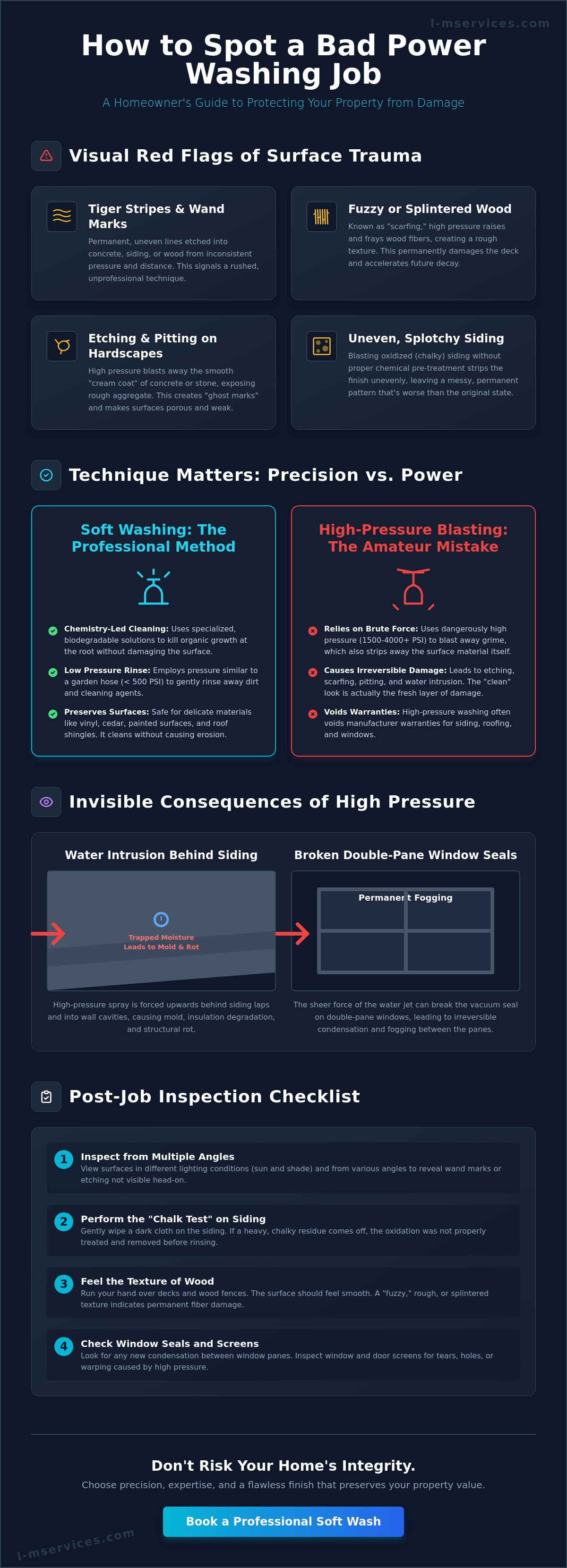
The appearance of "Tiger Stripes" is perhaps the most common signature of a rushed or uneven technique. These permanent, zebra-like patterns manifest on driveways and decks when an operator fails to maintain a consistent wand distance and speed. The mechanics of "scarfing" are particularly destructive to wood surfaces, as high-pressure streams permanently lift and fray the delicate cellulose fibers. These pressure washing techniques, when improperly applied, create a "fuzzy" texture that feels rough to the touch and actually attracts organic growth faster than before. Once these fibers are raised or the concrete is striped, the damage is often impossible to reverse without expensive professional resurfacing or full material replacement.
Etching and Pitting on King of Prussia Hardscapes
In residential pockets like King of Prussia, local hardscapes such as flagstone and aged concrete are highly vulnerable to high-PSI water streams. Pitting occurs when the smooth, protective "cream coat" of the concrete is blasted away, exposing the rough aggregate underneath and making the surface more porous. You can distinguish this mechanical damage from natural weathering by looking for sharp, jagged edges and deep grooves that follow the rhythmic path of the spray wand. Etching creates "ghost marks" or "wand burns" that are etched into the stone forever. If your stone surfaces look "eaten away" rather than simply refreshed, you're witnessing the results of professional negligence that compromises the stone's structural longevity.
Invisible Consequences: Structural and Environmental Red Flags
While surface scarring is an obvious deterrent, the most insidious damage often occurs out of sight. A homeowner's primary concern when learning how to spot a bad power washing job should be the structural integrity hidden beneath the facade. High-pressure streams can easily bypass the protective mechanisms of your home's envelope. Siding is designed to shed water falling vertically, not to withstand horizontal or upward blasts of pressurized liquid. When an operator uses excessive force, they can drive water deep into weep holes and behind siding laps. This results in trapped moisture within wall cavities, which eventually facilitates mold growth and degrades insulation.
Another delayed-onset issue involves the delicate seals of double-pane windows. The sheer force of a high-PSI stream can compromise these vacuum seals. You might not notice anything on the day of service, but weeks later, persistent fogging between the glass panes indicates a permanent failure. Amateurs also frequently ignore the complexities of oxidized siding. If a contractor simply blasts a chalky surface without the correct chemical treatment, they often leave behind an uneven, splotchy mess that becomes visible only after the surface dries. For homes built before 1978, these risks escalate significantly. Following EPA pressure washing requirements is mandatory to prevent the spread of lead-contaminated dust and water. Negligence here isn't just a bad job; it's a regulatory and health violation.
Hydrostatic Pressure and Water Intrusion
Hydrostatic pressure occurs when water is forced into spaces where it cannot escape. On vinyl or James Hardie siding, aggressive cleaning can push liquid into the attic or wall-cavity spaces. This is why directional spraying is a non-negotiable skill. A professional never aims the wand upward into soffits or laps. If you notice damp spots on interior ceilings or a musty odor following a service, these are clear indicators of structural water intrusion and a primary lesson in how to spot a bad power washing job. To avoid these structural risks, it's wise to consult with a provider like L&M Services LLP that understands the nuances of residential soft washing and its role in home preservation.
Chemical Negligence and Plant Health
The "Clean but Dead" syndrome is a frequent byproduct of careless chemical application. Professional-grade sodium hypochlorite is an effective biocide, but it requires disciplined dilution and careful management. You can identify chemical burn on leaves by looking for brown, brittle edges or spotting that appears within 24 to 48 hours. Proper technique involves pre-wetting all surrounding vegetation and post-rinsing thoroughly to neutralize surfactants. If your landscaping appears scorched or wilted after a cleaning session, it's a definitive sign that the contractor failed to manage their chemical runoff with the necessary professional care.
Soft Washing vs. Pressure Damage: Why Technique Matters
True mastery in exterior restoration is defined by a "Precision Over Power" philosophy that prioritizes chemical science over mechanical force. When homeowners seek to understand how to spot a bad power washing job, they must first recognize that brute force is often a mask for technical deficiency. A disciplined approach to cleaning mirrors the training of elite athletes, where focus, repetition, and technical mastery replace the need for aggressive, high-pressure tactics. By utilizing specialized surfactants, professionals can break the molecular bond of organic growth without causing the surface trauma discussed previously. This methodical strategy ensures that delicate materials like vinyl siding, asphalt shingles, and porous masonry remain structurally sound while achieving a level of cleanliness that mechanical scrubbing cannot replicate. For a deeper exploration of these industry benchmarks, refer to our comprehensive resource on Expert Power Washing in Philadelphia & King of Prussia: The Definitive 2026 Guide.
The role of surfactants in professional cleaning goes far beyond simple soap application. These advanced chemical solutions are engineered to lower the surface tension of water, allowing the cleaning agents to penetrate deep into the pores of a substrate. This penetration is what truly eliminates mold, algae, and lichen at a cellular level. Amateurs often bypass this step, opting instead for raw pressure to "scour" the surface. This mistake is a primary indicator of a low-quality service, as it leaves the underlying spores alive and ready to recolonize your home within months. A professional approach is quiet, deliberate, and focused on the long-term health of the building material.
The Soft Wash Standard for KOP Siding
In residential areas like King of Prussia, the local climate often facilitates rapid algae and mildew growth on residential siding. The professional standard for addressing this is soft washing, which utilizes a low-pressure output of approximately 60 PSI, roughly equivalent to a standard garden hose. This stands in stark contrast to traditional pressure washing, which can reach 3,500 PSI and easily compromise the integrity of vinyl or James Hardie boards. Soft washing is the only manufacturer-approved method for asphalt shingles and vinyl siding because it relies on "kill time." This allows biocidal detergents to eliminate spores at the root rather than simply blasting the visible growth across the surface, which only ensures a quicker return of the infestation.
When High Pressure is Actually Appropriate
While soft washing is the gold standard for delicate envelopes, high pressure remains a vital tool for specific, robust substrates. Unpainted concrete, brick pavers, and steel surfaces require higher mechanical force to extract deeply embedded oils and tannins. However, even in these scenarios, a bad job is easily identified by the use of a standard wand on flat surfaces. Professionals utilize "Surface Cleaners," which are rotating discs that maintain a consistent distance and pressure, to ensure even, stripe-free results. L&M Services LLP balances these two distinct methods with meticulous care, ensuring that every square inch of your property receives the exact level of force it was engineered to withstand.
The 2026 Post-Job Inspection Checklist for Homeowners
Once the cleaning crew has departed, the most critical phase of property preservation begins: the post-service inspection. Understanding how to spot a bad power washing job isn't just about identifying immediate trauma; it involves verifying that every technical standard was upheld throughout the process. A professional result should leave your home looking restored, not merely wet. To ensure your property remains a source of pride, we recommend conducting a thorough walk-through approximately one hour after the surfaces have dried, as moisture often masks lingering imperfections and streaks.
A primary tool in your inspection arsenal is the "Chalk Test" for siding. On vinyl or aluminum surfaces, oxidation creates a powdery white residue over time that requires specialized chemical treatment to remove. If a contractor claims to have cleaned the siding but your hand comes away white after rubbing the dry surface, they've failed to address the oxidation. They've essentially just rinsed the dirt off the top without restoring the material's finish. For more comprehensive insights into maintaining your property's value, explore our Exterior Home Maintenance in King of Prussia & Philadelphia: A Preservation Guide. Beyond the chalk test, pay close attention to the following areas:
Lighting Angles: View the siding and driveway from various angles during the late afternoon. Harsh, direct light often reveals streaks or uneven cleaning patterns that are invisible in the shade or while the surface is damp.
Transition Zones: Inspect the delicate areas where siding meets window frames and door casings. Amateurs often pull back the wand too early to avoid hitting glass, leaving a "halo" of dirt around the perimeter of your home's most visible features.
Perimeter Integrity: Check your landscaping for displaced mulch or chemical debris. A professional leaves the site exactly as they found it, ensuring no sand or detergent residue remains on your lawn, walkways, or porch furniture.
The Siding and Trim Inspection
When reviewing your home's envelope, look specifically for "fuzzing" on wood trim. This texture indicates that the water pressure was too high for the soft grain of the wood, which permanently damages the fibers and creates a porous surface for future mold growth. You should also check for "dead spots" at the very top of the siding, just beneath the gutters. This is an area frequently missed by rushed operators who fail to use the proper extension tools. If you notice persistent water spots or streaks on your window glass, it's a sign of a poor rinsing technique or the use of hard water that leaves mineral deposits behind. If your current results don't meet these rigorous standards, it's wise to consider professional power washing services that prioritize precision over speed.
Hardscape and Flatwork Review
Your driveway and walkways deserve the same level of scrutiny as your home's siding. Run your hand over the concrete to feel for new pitting or rough patches. These are clear signs that the protective "cream coat" has been compromised by excessive PSI. Additionally, look for "swirl marks" on the surface. These circular patterns are left by the improper use of a rotating surface cleaner, usually because the operator moved too quickly or the equipment was not properly balanced for the concrete's age. Finally, verify that all sand and organic debris have been thoroughly washed away from the edges of the driveway rather than simply being pushed into your flower beds or drainage systems.
Remedying a Botched Job and Choosing a Precision Partner
Discovering that a service meant to enhance your home has instead compromised its integrity is a distressing experience for any property owner. While our previous chapters detailed how to spot a bad power washing job, the subsequent steps you take are vital for mitigating financial and structural loss. When professional negligence occurs, immediate documentation is your most powerful tool. Capture high-resolution photographs of the affected areas from multiple angles, ideally comparing them to "before" photos to substantiate a claim of recent trauma. Clear communication with the contractor is the first step, but you must recognize the limitations of remediation. Some issues, such as deep etching in stone or "scarfed" wood fibers, cannot be reversed through cleaning; they often require full material replacement to restore the home's original value.
Our approach at L&M Services LLP is built on the "Division 1 Edge," a philosophy rooted in the rigorous discipline of elite athletics. We understand that a "bad" job is often the result of a lack of focus or the prioritization of speed over precision. Our "Human + Technology" synergy ensures that personal oversight remains the ultimate differentiator in every project. While automated or rushed crews might miss the nuances of a specific substrate, our team applies a methodical workflow that treats your property as a high-value asset rather than a simple weekend task. This commitment to excellence is why we encourage homeowners to prioritize the Best Power Washing King of Prussia has to offer for total peace of mind.
Holding Contractors Accountable
Substantiating a claim of negligence requires a logical and evidence-based approach. Your "Before" and "After" photos serve as the primary evidence in any dispute, clearly showing where mechanical force exceeded the material's tolerance. If structural damage like water intrusion or blown window seals is suspected, a professional contractor's General Liability insurance should cover the cost of repairs. It's essential to verify this coverage before any work begins. A professional service agreement should always include a "satisfaction and safety" clause, which outlines the provider's responsibility in the event of property damage, ensuring that you aren't left to shoulder the burden of their technical errors.
The L&M Services LLP Difference in King of Prussia
The distinction between a vendor and a strategic partner lies in the preparation. Our meticulous pre-wash property protection protocol includes taping off electrical outlets, covering sensitive vegetation, and ensuring all window seals are intact before a single drop of water is sprayed. This "no shortcuts" approach is a direct reflection of our background as athletes, where preparation is the foundation of performance. We recognize that your home's reputation is an extension of your own, and we provide a level of deep contextual adjustment that simple cleaning companies cannot match. By choosing a partner who values precision chemistry and human expertise, you protect your home from the risks of amateur negligence and ensure a lasting, restorative result.
Protecting Your Home’s Legacy Through Precision Maintenance
Maintaining the aesthetic and structural integrity of your property requires more than just a seasonal rinse; it demands a sophisticated understanding of material science and technical execution. By recognizing the critical distinction between restorative soft washing and destructive high-pressure methods, you ensure that your home's envelope remains secure for years to come. Knowing exactly how to spot a bad power washing job through disciplined inspection techniques, such as the chalk test for oxidation and evaluating transition zones, allows you to hold contractors to a standard of excellence that reflects your property's true value.
At L&M Services LLP, we bring the focused discipline of former Division 1 athletes to every project we undertake. Our specialized soft wash systems are specifically engineered for the unique needs of King of Prussia homes, providing a safe, chemical-led alternative to raw mechanical force. As a fully insured, local partner, we prioritize the long-term preservation of your assets over mere volume. Secure your property with a precision-led exterior cleaning quote from L&M Services LLP today. Your home deserves a level of care that matches its significance, and we look forward to helping you preserve its beauty with absolute precision.
Frequently Asked Questions
Can a bad power washing job cause mold inside my house?
Yes, excessive pressure can force water behind your home’s siding and into the wall cavities. This moisture becomes trapped, creating an ideal environment for mold growth and insulation degradation. Understanding how to spot a bad power washing job involves checking for musty odors or damp interior walls immediately following a service, as these signs indicate that the home's envelope was compromised by improper directional spraying.
How do I get rid of 'tiger stripes' on my driveway?
Tiger stripes are often permanent because they represent areas where the concrete’s top layer was physically removed by inconsistent wand movement. To mitigate the appearance, a professional might attempt to even out the surface using a specialized circular surface cleaner. However, if the etching is deep, the only restorative solution is a professional resurfacing or a complete replacement of the affected driveway sections to restore aesthetic uniformity.
Is it normal for my siding to look chalky after a power wash?
It isn't normal for siding to remain chalky after a professional cleaning. This residue, known as oxidation, requires a specific chemical restoration process rather than just high pressure. If you can still wipe white powder off your siding after it has dried, the contractor failed to address the material’s actual condition, opting instead for a superficial rinse that left the underlying oxidation untouched.
What should I do if a contractor killed my plants during a house wash?
You should immediately document the damage with photographs and contact the service provider to file a claim against their General Liability insurance. Chemical burns usually manifest as brown, brittle leaf edges within 48 hours of the service. Professional mitigation involves thorough rinsing to neutralize surfactants; however, if the plants don't recover, the contractor is responsible for replacement costs due to their failure to protect the landscaping.
How can I tell if my window seals were blown by a pressure washer?
Fogging or persistent condensation between the glass panes is the primary indicator that a window’s vacuum seal has been compromised. This damage often has a delayed onset and becomes visible only when temperatures fluctuate weeks after the cleaning. High-pressure streams can easily displace these delicate seals, leading to permanent thermal failure that necessitates the replacement of the entire glass unit.
Can etched concrete be repaired, or does it need to be replaced?
Etched concrete is difficult to repair because the smooth "cream coat" has been blasted away, exposing the porous aggregate beneath. While some high-end resurfacing products can mask the damage, they often struggle to bond perfectly with the compromised substrate over time. In many cases, especially where aesthetic uniformity is required for property value, replacement is the only viable path to restoring the original appearance.
Is soft washing more expensive than traditional power washing?
Soft washing is a specialized service that utilizes precision chemistry and low-pressure equipment, which reflects a different investment in technical expertise and high-grade biocides. While it's a premium approach, it's significantly more cost-effective than the thousands of dollars required to repair structural damage caused by high pressure. It’s a strategic choice for homeowners who prioritize long-term property preservation over the lowest possible quote.
How often should I have my King of Prussia home professionally cleaned to avoid damage?
Most homes in the King of Prussia area benefit from a professional exterior cleaning every 12 to 18 months. This frequency prevents the buildup of organic growth like algae and lichen, which can take deep root in porous surfaces if left unchecked. Regular maintenance ensures that you don't have to worry about how to spot a bad power washing job, as consistent, low-pressure care prevents the need for aggressive, risky cleaning sessions.
Comments