Soft Washing for Delicate Surfaces: The Precision Guide to Exterior Preservation
- Thomas Latham
- May 26
- 13 min read

The very equipment designed to restore your home's beauty might actually be the greatest threat to its structural integrity. While high-pressure water seems like a logical solution for deep cleaning, it often forces moisture behind siding, strips delicate paint layers, and prematurely ages expensive roofing shingles. You likely recognize that your property deserves a meticulous level of care, yet the persistent worry of accidental damage or recurring organic growth often leads to understandable hesitation.
Professional soft washing for delicate surfaces offers a sophisticated alternative that prioritizes long-term preservation through chemical precision rather than brute force. By utilizing specialized solutions and pressures typically under 500 PSI, this method treats your exterior as a valuable asset to be maintained rather than a surface to be scrubbed. You'll discover how this expert approach provides a deeper clean that often lasts significantly longer than traditional methods. This guide explores the strategic synergy of science and service, ensuring your home achieves a pristine finish and increased curb appeal without compromising its structural health. We will examine the specific benefits of low-pressure techniques and the specialized solutions that provide a lasting defense against mold and algae.
Key Takeaways
Understand the fundamental distinction between mechanical force and the specialized chemical sanitization used in soft washing for delicate surfaces to ensure long-term structural integrity.
Identify which architectural elements, including historic brick and modern stucco, require low-pressure treatment to prevent irreversible moisture intrusion and surface erosion.
Learn why traditional pressure washing often leaves biological roots behind and how soft washing provides a deeper, sanitized finish that remains pristine significantly longer.
Discover the importance of a disciplined multi-step protocol that prioritizes the protection of your property’s surrounding ecosystem and landscaping during the cleaning process.
Explore how a rigorous, athlete-inspired approach to exterior maintenance translates into superior precision and a higher standard of property preservation.
Table of Contents
Understanding the Science of Soft Washing for Delicate Surfaces
Modern property maintenance has evolved beyond the blunt application of force. While traditional methods often rely on high-velocity water to strip away surface debris, soft washing for delicate surfaces represents a disciplined shift toward chemical precision. This methodology prioritizes the preservation of the substrate by utilizing low-pressure delivery systems combined with targeted cleaning agents. It's a sophisticated approach that treats the exterior not as a surface to be conquered, but as a complex ecosystem that requires careful sanitization. By focusing on the root cause of organic growth rather than just the visible symptoms, this technique ensures a deeper, more enduring clean that respects the material's structural integrity.
Many homeowners mistakenly equate "soft" with "weak," yet the efficacy of this method lies in its ability to saturate and neutralize contaminants at a molecular level. While mechanical force only shears off the top layer of growth, chemical saturation penetrates the material to ensure a total kill of spores. This transition from mechanical energy to chemical energy is what allows professionals to restore a home's aesthetic without the risk of etched wood or cracked siding.
The Chemical Mechanism: How Surfactants Work
At the heart of this process lies the strategic use of biodegradable surfactants. A surfactant is a surface-active agent that reduces liquid tension. This reduction in tension allows the cleaning solution to move beyond the surface and penetrate the microscopic pores of materials like brick, wood, and stucco. Instead of scrubbing, which can cause abrasive wear, these agents lift organic matter and environmental pollutants away from the material. A critical component of this success is dwell time. By allowing the solution to remain on the surface for a calculated duration, professionals ensure a comprehensive kill of mold, mildew, and algae spores. Understanding the Science of Soft Washing highlights how this chemical engagement achieves results that far outlast mechanical cleaning, as it addresses the biological roots that pressure alone cannot reach.
PSI vs. GPM: Why Volume Matters More Than Pressure
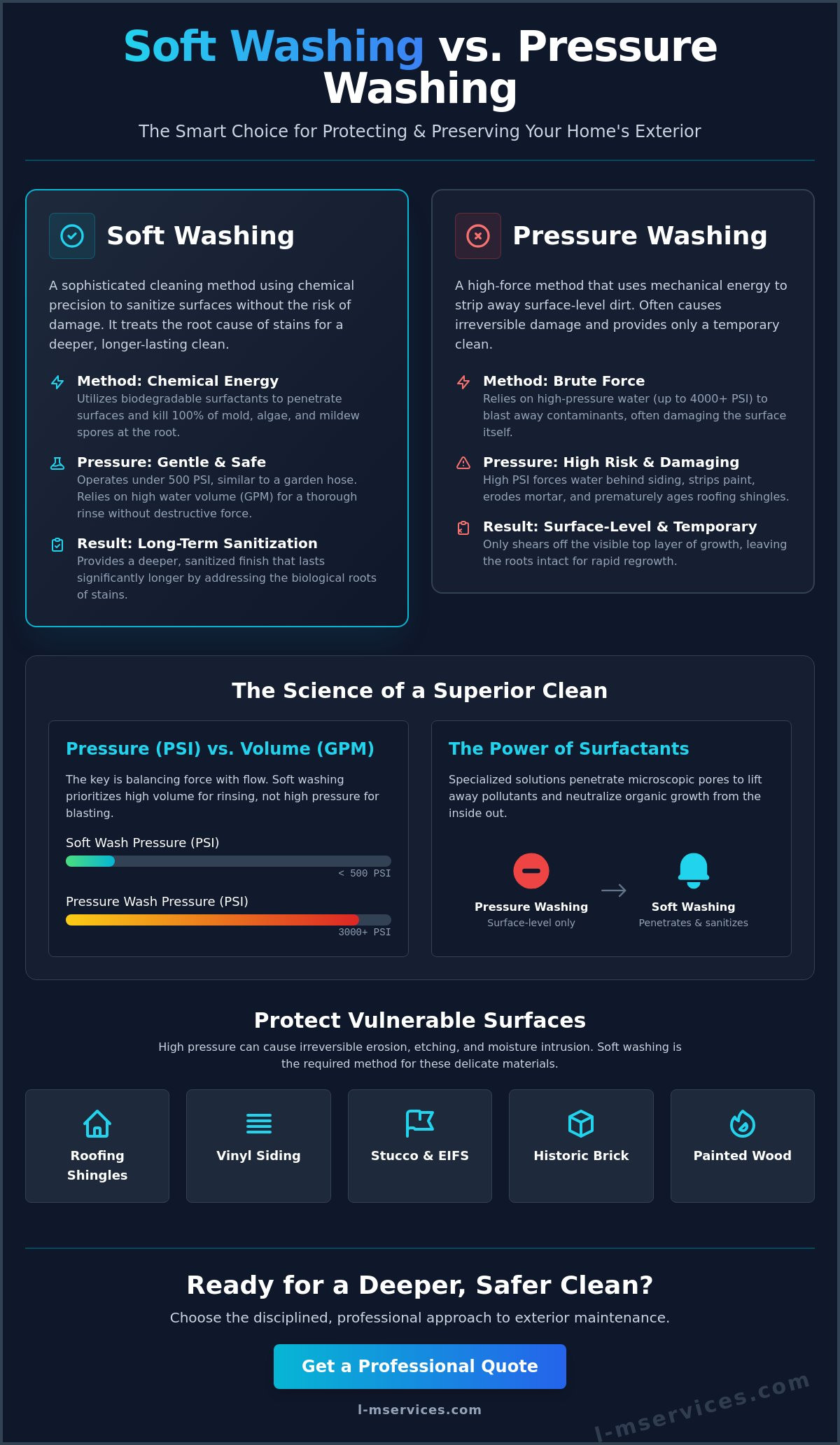
The technical distinction between Pounds per Square Inch (PSI) and Gallons per Minute (GPM) is the defining factor in exterior preservation. High PSI creates an aggressive stream that can easily breach window seals or force liquid behind vinyl siding, leading to hidden moisture issues. Soft washing for delicate surfaces typically operates below 500 PSI, relying instead on a higher GPM flow. This high-volume, low-pressure approach provides a gentle curtain of water that rinses away contaminants without the risk of structural damage. The physics of this delivery system ensures that water remains on the exterior plane, preventing the water intrusion that often accompanies high-pressure alternatives. This strategic balance of volume over velocity is the gold standard for maintaining the integrity of fragile residential substrates.
Identifying Vulnerable Materials: When to Choose Soft Over Power Washing
King of Prussia homes often feature a sophisticated blend of historic masonry and contemporary building materials. This architectural diversity requires a nuanced understanding of material science to avoid permanent property damage. The environmental conditions in the Greater Philadelphia region create a specific set of challenges for these structures. High humidity levels frequently lead to the rapid accumulation of organic biofilms, particularly on North-facing walls where limited sunlight allows moisture to linger. For these specific conditions, soft washing for delicate surfaces is the only viable preservation strategy. It allows for the thorough removal of contaminants without the risk of fracturing brittle substrates or compromising the building's envelope.
Identifying which surfaces are vulnerable is the first step in a disciplined maintenance protocol. Porosity and age are the primary indicators of risk. Materials that have become weathered over time lose their structural elasticity, making them susceptible to the "etching" effect of high-pressure water. Certain surfaces should be considered red flags for high-pressure equipment, including aged mortar joints in historic brick, oxidized aluminum siding, and softwoods used in decking. Property owners who prioritize long-term value often choose a professional soft washing service to maintain these sensitive areas while ensuring the structural integrity of their investment remains intact.
Stucco and EIFS: The Fragile Giants of KOP Homes
Stucco and Exterior Insulation and Finish Systems (EIFS) are notoriously susceptible to damage from mechanical force. High-pressure streams can cause permanent "tiger stripes" or visible scarring that often requires expensive resurfacing to correct. More dangerously, excessive pressure can breach the outer seal of EIFS, trapping moisture within the insulation layers. This trapped water often leads to hidden rot and mold growth within the wall cavity. Soft washing treats these surfaces by sanitizing the deep pores of the finish, effectively removing stains while keeping the moisture barrier completely secure.
Roofing Systems: Asphalt Shingles and Cedar Shakes
Roofing materials require an even more disciplined approach to cleaning. Asphalt shingles rely on a layer of protective granules to reflect UV rays and resist weathering. Traditional power washing can strip these granules away, effectively shortening the roof's lifespan and voiding manufacturer warranties. Similarly, cedar shakes contain natural oils that are essential for their flexibility and rot resistance. High pressure can strip these oils and splinter the wood fibers. By applying the science of soft washing, technicians can neutralize Gloeocapsa magma, the bacteria responsible for unsightly black streaks, without disturbing the delicate composition of the roofing system. This method ensures the roof is sanitized at the source, preventing the rapid return of organic growth.
Soft Washing vs. Pressure Washing: A Risk-Benefit Analysis
Choosing between mechanical force and chemical sanitization is a decision that defines the long-term health of your property. Many homeowners view pressure washing as the default solution for exterior grime, yet this method often provides an immediate visual "clean" that is ultimately superficial. While high-pressure streams might strip away visible grime, they often leave behind the microscopic root systems of algae and lichen. Soft washing for delicate surfaces addresses the biological reality of exterior contamination by treating the root cause rather than just the surface symptoms. This distinction is critical for property owners who prioritize preservation over a temporary aesthetic fix.
The risks associated with high-pressure cleaning extend beyond simple surface wear. Excessive PSI carries the significant danger of breaching window seals or forcing water into attic vents, leading to hidden moisture problems that may not manifest for months. In contrast, the low-pressure delivery used in soft washing ensures that water stays on the exterior plane. When you evaluate the cost-benefit of these methods, the longevity of the results becomes the primary differentiator. Investing in a preservation-focused approach reduces the frequency of cleaning cycles and prevents the costly repairs often necessitated by aggressive mechanical washing.
The Hidden Dangers of High Pressure
Excessive pressure can cause irreversible damage to common residential materials. On wooden decks and fences, high PSI often leads to "fuzzing" or furring, where the water stream shreds the top layer of wood fibers and leaves a rough, damaged texture. Aged brickwork is similarly vulnerable; high pressure can easily blow out brittle mortar joints, compromising the masonry's stability. Perhaps most counterintuitively, aggressive pressure washing can inadvertently force mold and mildew spores deeper into porous materials like stone or concrete. This creates a recurring cycle of growth that is harder to eradicate over time, as the contaminants are pushed further away from the reach of surface treatments.
Longevity and Regrowth: The Sanitization Advantage
Surfaces treated with professional sanitization typically stay clean two to three times longer than those cleaned with pressure alone. This is due to the "Total Kill" concept, which ensures that organic matter is neutralized at the molecular level so it cannot immediately recolonize the surface. Research indicates that soft washing results can last four to six years, whereas traditional pressure washing effects often fade within six to twelve months. For homeowners looking to establish a disciplined preservation schedule, reviewing a guide on exterior home maintenance philadelphia ensures that your property remains protected throughout the changing seasons. This proactive approach to maintenance guarantees that your home's most fragile elements receive the meticulous care they require to endure the region's humid climate.
The Professional Soft Washing Process: Precision and Protection
Precision in exterior preservation is never an accident; it is the result of a disciplined, multi-step protocol that mirrors the rigor of high-level athletics. Every property presents a unique set of variables, from the age of the masonry to the specific species of organic growth present on the facade. A professional approach requires more than just specialized equipment. It demands a deep commitment to a structured workflow that prioritizes the safety of the structure and its surrounding environment. This level of "Meticulous Mastery" ensures that soft washing for delicate surfaces remains a safe, effective, and predictable endeavor for even the most fragile residential substrates.
The process begins with a comprehensive pre-treatment ritual designed to safeguard the property's ecological footprint. Rather than rushing into the cleaning phase, technicians focus on the details that others might overlook, such as sealing electrical outlets and assessing the health of nearby vegetation. This methodical preparation is followed by precision mixing, where cleaning solutions are tailored to the exact level of infestation. Once the treatment is complete, a thorough post-rinsing and the application of neutralizing agents ensure a residue-free finish. The workflow concludes with a final inspection that meets a "D1 Athlete" standard of detail, ensuring every corner of the property reflects a commitment to excellence.
Plant and Landscape Safeguarding
King of Prussia landscapes represent a significant financial and aesthetic investment for homeowners. To protect this investment, professional protocols include extensive pre-wetting of all delicate ornamental plants and turf. This creates a protective water barrier that prevents the foliage from absorbing cleaning solutions. In conjunction with this, the use of neutralizing agents ensures that soil pH remains balanced throughout the process. Professional oversight is critical here; an expert eye can identify which rare or sensitive species require additional physical shielding to remain vibrant and healthy after the service is complete.
Customized Chemical Ratios for Specific Contaminants
Not all organic growth is created equal. Green algae, black mold, and stubborn lichen each require a specific concentration of surfactants to be effectively neutralized. Professional systems allow for on-the-fly ratio adjustments, ensuring the concentration of cleaning agents is perfectly calibrated for the task at hand. This customization prevents the use of excessive chemicals, which protects both the material and the environment. Beyond efficacy, this precision ensures the safety of pets and children by utilizing proper dilution and thorough rinsing techniques that leave the area sanitized and secure. If you are ready to experience this level of meticulous care, you can schedule your residential soft washing service with our team of dedicated specialists.
Why a Disciplined Approach to Exterior Maintenance Matters
The discipline required to compete as a Division 1 athlete is not unlike the rigor necessary to maintain a luxury estate. Both require a relentless commitment to detail, a highly structured workflow, and the understanding that small oversights often lead to significant failures. This concept of "Meticulous Mastery" is the cornerstone of our approach to high-stakes residential cleaning. When a property owner selects soft washing for delicate surfaces, they aren't simply hiring a vendor for a one-time chore. They're entering a strategic partnership aimed at long-term asset protection. L&M Services LLP operates on this partnership model, ensuring that every service is executed with the same level of precision and oversight that a dedicated guardian of brand integrity would provide.
Selecting a precision-focused provider offers a superior return on investment by extending the lifecycle of expensive exterior materials. While volume-based businesses often prioritize speed, a disciplined approach ensures that every shingle, stone, and siding panel is treated with the specific care it requires. This meticulousness prevents the premature degradation of building materials and maintains the property's curb appeal at its peak. By viewing exterior maintenance as a component of wealth management rather than a line-item expense, homeowners can secure the future of their most significant physical assets. Detail matters. It defines the difference between a simple wash and a professional restoration.
The L&M Precision Standard in King of Prussia
Our commitment to excellence is deeply rooted in cultural intelligence and a profound respect for the brand integrity of every home we serve. In King of Prussia, where architectural styles range from the historic to the ultra-modern, a one-size-fits-all cleaning method is inadequate. Our boutique approach allows for personalized attention that volume-based vendors simply cannot replicate. While some surfaces benefit from low-pressure sanitization, others may require the best power washing king of prussia has to offer for more resilient substrates like concrete or stone. This flexibility ensures that every inch of your property receives the exact treatment it needs for optimal preservation.
Securing Your Property’s Future
Ultimately, exterior maintenance is an investment in the longevity and value of your home. A customized service model allows us to address the unique challenges of your specific property, from the direction of the wind to the types of vegetation surrounding your foundation. We invite you to move beyond basic cleaning and embrace a strategy of professional preservation. You can request your precision soft washing quote today to begin a partnership dedicated to the meticulous care of your home's exterior. By choosing soft washing for delicate surfaces, you are making a conscious decision to protect your investment with the highest standard of professional mastery.
Elevate Your Property Preservation Standard
We've explored how soft washing for delicate surfaces moves beyond the limitations of mechanical force to provide a scientific, sanitized clean. By understanding the specific vulnerabilities of materials like stucco and asphalt shingles, you can prevent the permanent damage often caused by high-pressure alternatives. This disciplined approach ensures that your home remains a pristine asset while protecting the surrounding King of Prussia landscape. It's a fundamental shift from temporary cleaning to long-term structural preservation.
L&M Services LLP, founded by D1 athletes, brings a unique level of rigor and meticulous oversight to every project. Our use of precision-mixed biodegradable solutions reflects our specialization in high-value estates, where every detail matters. We invite you to transition from basic maintenance to a strategic partnership that prioritizes the structural integrity of your home. Experience the Precision of L&M Soft Washing and secure the aesthetic future of your property. Your home represents a significant investment; it deserves a level of care that matches its value.
Frequently Asked Questions
Is soft washing safe for my plants and landscaping?
Soft washing is entirely safe for your landscape when managed by a disciplined professional who utilizes comprehensive safeguarding protocols. These measures include the thorough pre-saturation of foliage with clean water and the application of neutralizing agents to maintain soil equilibrium. This meticulous oversight ensures that your ornamental plants remain vibrant while the surrounding structures are sanitized.
Can soft washing remove the black streaks on my roof?
Soft washing is the most effective method for eradicating Gloeocapsa magma, the bacteria responsible for unsightly black streaks on asphalt shingles. Unlike mechanical scrubbing, this process neutralizes the biological growth at its source without disturbing the protective granules of the roofing system. This approach restores the aesthetic integrity of your roof while ensuring compliance with manufacturer warranty requirements.
How long does the results of a soft wash service last?
The results of a professional soft wash service typically endure for four to six years, representing a significant increase in longevity compared to traditional methods. Because the process sanitizes the surface at a molecular level, it prevents the rapid recolonization of organic matter. This extended duration offers a superior return on investment for homeowners who prioritize long-term property preservation.
What is the difference between soft washing and a regular garden hose?
A garden hose lacks the specialized delivery systems and precisely calibrated chemical solutions required to achieve a total biological kill. While a hose might rinse away loose debris, it doesn't penetrate the pores of the substrate to neutralize deeply embedded spores. Professional soft washing for delicate surfaces utilizes industrial-grade pumps and surfactants that ensure a level of sanitization a standard residential hose simply can't match.
Does soft washing use bleach or harmful chemicals?
Professional soft washing utilizes sodium hypochlorite as a primary cleaning agent, which is precision-mixed with biodegradable surfactants to ensure maximum efficacy and safety. When managed by an expert, these solutions are diluted to levels that are safe for the environment and then thoroughly rinsed with neutralizing agents. This strategic approach ensures a pristine finish without leaving behind harmful residues for your family or pets.
How much does professional soft washing cost in the Philadelphia area?
Pricing for professional soft washing in the Philadelphia region is typically determined by the total square footage and the complexity of the architectural elements involved. Factors such as the height of the structure and the specific level of organic infestation will influence the final investment. For a precise evaluation of your property's needs, it's best to request a customized service model that accounts for your home's unique requirements.
Is soft washing better than power washing for vinyl siding?
Soft washing for delicate surfaces is the preferred method for vinyl siding because it eliminates the risk of forcing water behind the panels or cracking the material under high pressure. Aggressive power washing can also disturb the oxidation layer on older siding, leading to uneven streaks that are difficult to correct. Low-pressure sanitization provides a uniform clean that respects the structural integrity of the building envelope.
What happens if you use high pressure on stucco surfaces?
Utilizing high pressure on stucco surfaces often results in permanent scarring, commonly referred to as "tiger stripes," which can only be repaired through expensive resurfacing. Beyond aesthetic damage, excessive force can breach the delicate moisture barrier of the finish, leading to water intrusion within the wall cavity. This hidden moisture often causes structural rot and mold growth that compromises the entire building envelope.
Comments